In 2025, Korea's exports of food and agricultural products reached a record $13.62 billion. The United States was the single largest importer of Korean agro-food, taking in $1.8 billion — up 13.2 percent in a single year. Ramyeon noodles alone crossed $1.5 billion globally, a 21.9 percent jump. According to a 2025 survey by the Korea Food Promotion Institute, two out of every three people worldwide have now tasted Korean food.
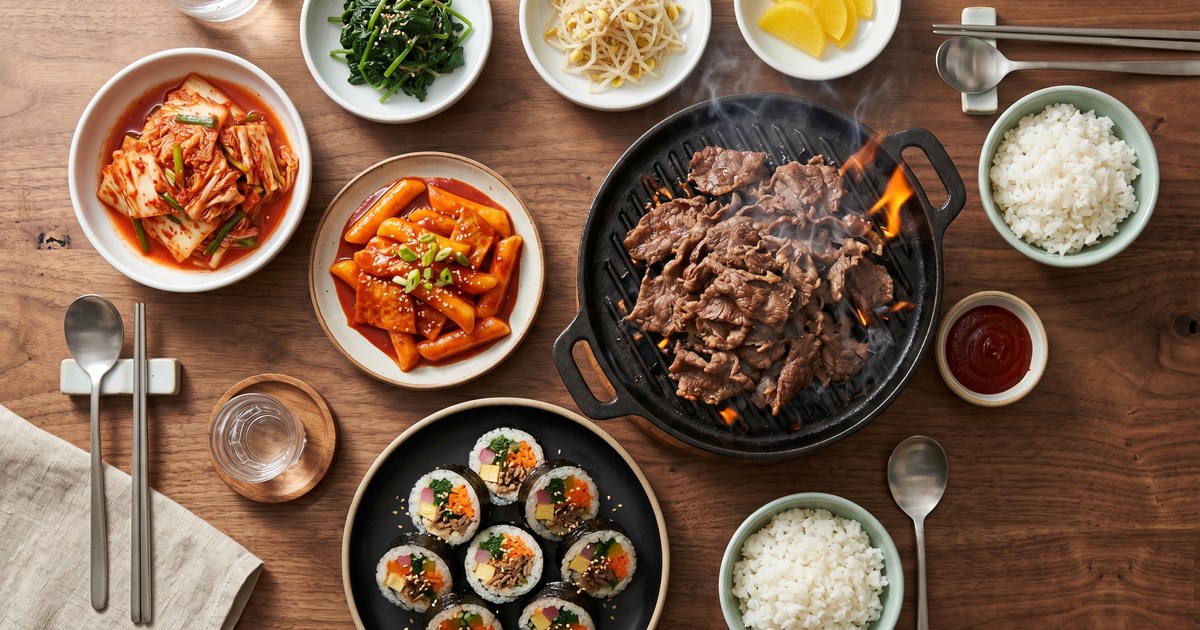
Walk through a typical American grocery store and the change is visible. Kimchi has its own refrigerated section. Gochujang sits next to the ketchup. Frozen Korean dumplings, instant tteokbokki cups, and rice-cake snacks share shelf space with frozen pizza. Bonchon and other Korean fried chicken chains have opened across the country. Social media speaks fluent Korean food: cheesy tteokbokki, tornado potatoes, mayak gimbap, and the dalgona coffee that started during the pandemic but never quite left.
For our families, this everyday visibility matters more than headlines do. The lunchroom table is a quiet test for any child whose food doesn't match what everyone else opens. For a long time, Korean kids in the U.S. felt that test sharply. The lunchbox kimbap was something to explain, or to hide. That has changed. Today the kid with kimbap is the kid everyone else wants to trade with.
Food is not a side topic at our school — it is part of the curriculum. Every Chuseok and Seollal we cook together. Younger students learn the words for what they are eating before they learn the grammar that describes it. Parents discover, sometimes for the first time, just how much of the language lives inside a recipe — the particular verb for stirring, the difference between 매콤한 and 매운, the way a single side dish carries a region's history.
Korean food going mainstream is not a peak. It is a foundation. The kids who grow up with it on every menu will see Korean as something the whole country happily eats with — and then, with our help, they will know exactly what they are eating, in the language it was named in.