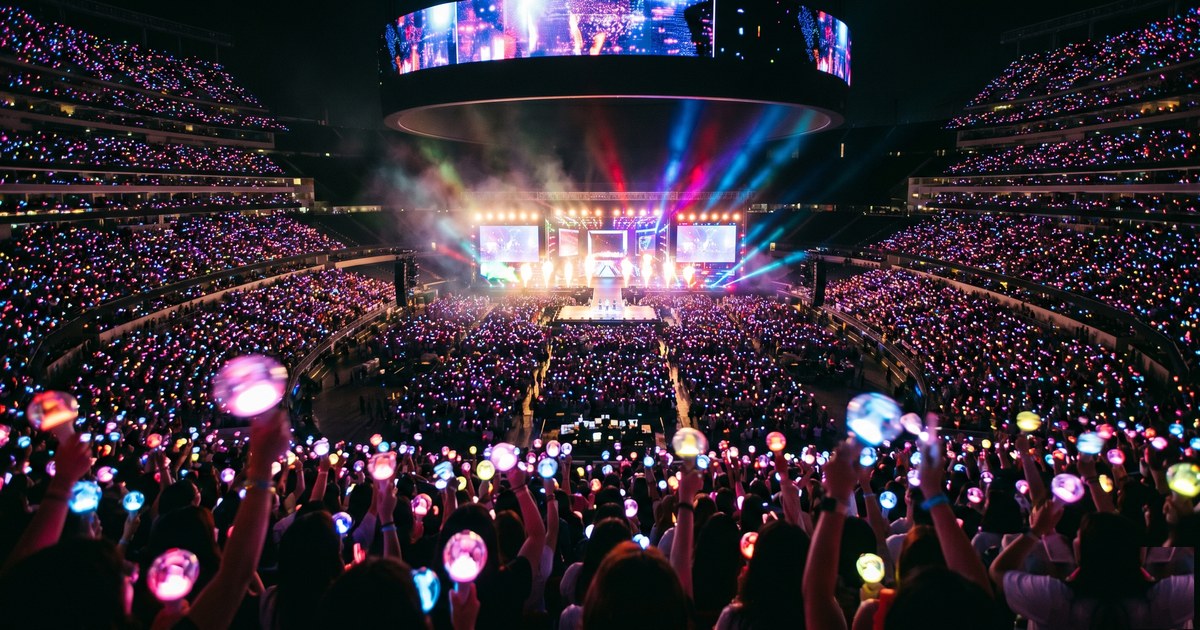
There was a time, not so long ago, when explaining "K-pop" required a sentence or two. That time is over. In the summer of 2025, BLACKPINK's Deadline tour became the group's first all-stadium run across North America, with a worldwide gross projected near $440 million. Stray Kids' DominATE tour grossed $185.9 million and moved 1.3 million tickets. ENHYPEN, IVE, aespa, and the returning members of BTS now headline the same venues that once belonged exclusively to Taylor Swift and Beyoncé.
What makes this moment different from earlier waves of imported music is the language. Fans aren't asking for English versions. They are learning the Korean lyrics, line by line, and proudly singing them back. A whole generation of American teenagers can pronounce 사랑해 with the right vowel, and recognizes the difference between 오빠 and 형 without having to look it up.
For the students at our school, this changes everything. Korean is no longer the language only spoken at grandma's house. It is on the playlist in their friend's car. It is the chorus they shout at the concert with twenty thousand other people. Suddenly, the homework they bring home on Saturday morning has a payoff their friends genuinely envy.
There is a particular look a student gets when they realize they understand a line their non-Korean friends had to Google. It is the look of belonging — of standing inside something the rest of the room is trying to catch up to. K-pop didn't create that feeling, but it is making it possible for more children than ever.
Our job, as a Korean school, is to give that head start its full depth. Knowing the lyrics is wonderful. Understanding the grammar that makes those lyrics work, hearing the cultural echoes inside a song, holding a real conversation with a Korean grandparent about why one verse moved them — that is the gift we add on top. K-pop is the doorway. The school is the house behind it.